Table of Contents
ToggleThe Oblivion vs Skyrim debate has sparked countless discussions among Elder Scrolls fans since Skyrim’s release in 2011. Both games offer hundreds of hours of exploration, memorable quests, and deep RPG systems. Yet they approach the open-world fantasy experience differently. Oblivion, released in 2006, brought players to the lush province of Cyrodiil. Skyrim transported them to the frozen north, introducing dragons and a streamlined skill system. Which game deserves a spot in a player’s library today? This comparison breaks down the key differences between Oblivion vs Skyrim across setting, gameplay, character progression, storytelling, and visuals.
Key Takeaways
- Oblivion vs Skyrim offers two distinct fantasy experiences: Oblivion features a classical, lush setting while Skyrim delivers a rugged Nordic atmosphere.
- Skyrim’s combat feels more action-oriented with every hit connecting, while Oblivion uses deeper RPG dice-roll mechanics.
- Oblivion’s class-based character system rewards strategic planning, whereas Skyrim lets players level any skill freely without restrictions.
- Many fans consider Oblivion’s quests more creative and memorable, but Skyrim offers greater quantity and makes players the central hero.
- Both games have thriving modding communities that keep them playable in 2025, with Skyrim’s mod scene being the largest.
- The Oblivion vs Skyrim choice ultimately depends on whether you prefer traditional RPG depth or streamlined action gameplay.
Setting and World Design
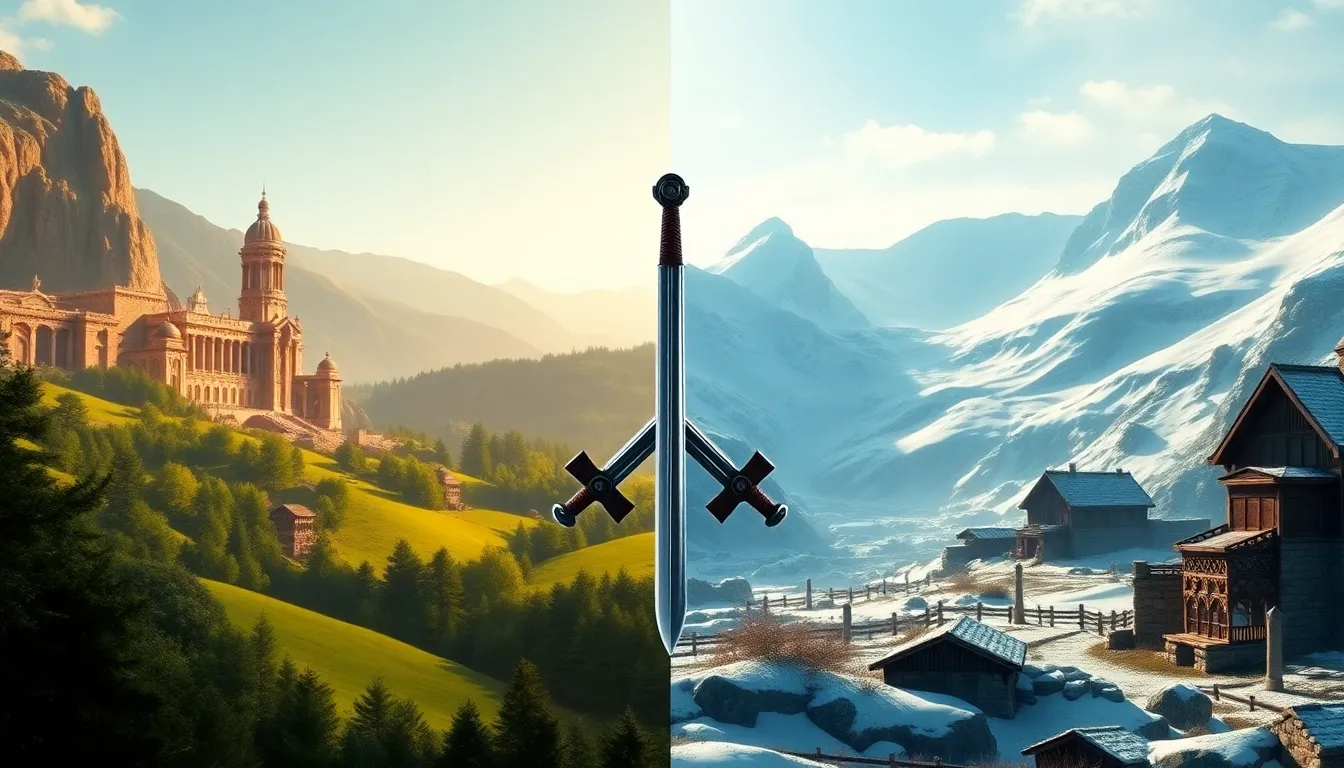
Oblivion vs Skyrim presents two distinct visions of Tamriel. Oblivion takes place in Cyrodiil, the heart of the Empire. Players explore rolling green hills, dense forests, and ancient Roman-inspired cities. The province feels warm and classical. Each major city has its own architectural style, from the wooden structures of Chorrol to the grand towers of the Imperial City.
Skyrim moves the action north to a harsh, mountainous land. Snow-capped peaks dominate the landscape. Nordic villages dot the tundra. Ancient ruins hide beneath glaciers. The atmosphere feels colder, grittier, and more dangerous.
World design differs significantly between the two. Oblivion’s landscape can feel somewhat repetitive. Many dungeons share similar layouts and textures. Skyrim improved on this with more varied dungeon designs. Each cave, tomb, or fort in Skyrim tells its own story through environmental details.
Scale matters too. Skyrim’s world feels more vertical. Mountains create natural barriers and reward exploration with hidden paths. Oblivion offers a flatter, more accessible terrain. Players can see distant landmarks and travel to them without many obstacles.
Both games excel at creating a sense of place. Oblivion captures a dying empire at its peak of civilization. Skyrim shows a frontier province torn by civil war. The choice between Oblivion vs Skyrim often comes down to whether players prefer classic fantasy or rugged Nordic adventure.
Gameplay Mechanics and Combat Systems
Combat represents one of the biggest differences in the Oblivion vs Skyrim comparison. Oblivion uses a dice-roll system under the hood. Swings can miss even when they appear to connect. This frustrates some players but adds RPG depth. Characters grow noticeably stronger as skills increase.
Skyrim overhauled combat entirely. Every swing that looks like a hit actually lands. The system feels more action-oriented and immediate. Players can dual-wield weapons, combine spells with swords, or block with shields using timing-based mechanics.
Magic works differently in each game. Oblivion allows spell creation. Players can combine effects to craft custom spells. This system offers tremendous flexibility. A mage can create a spell that damages health, drains stamina, and paralyzes enemies all at once. Skyrim removed spell crafting entirely. It offers preset spells that players unlock through skill trees.
Stealth gameplay improved in Skyrim. The sneak system feels more responsive. Visual indicators show detection states clearly. Oblivion’s stealth works but feels clunkier by comparison.
The Oblivion vs Skyrim debate often hinges on these mechanical differences. Players who want deeper RPG systems may prefer Oblivion. Those seeking fluid action combat typically choose Skyrim.
Character Progression and Skills
Character building differs dramatically between Oblivion vs Skyrim. Oblivion uses a class-based system. Players choose major and minor skills at character creation. Only major skills contribute to leveling up. This creates strategic decisions from the start.
Skyrim abandoned classes completely. Any skill can contribute to character growth. Players level up by using any skill. This freedom lets characters evolve organically based on playstyle.
The attribute system changed too. Oblivion features eight attributes: Strength, Intelligence, Willpower, Agility, Speed, Endurance, Personality, and Luck. Players increase attributes when they level up. The amount depends on which skills they used. This system rewards planning but can punish casual play.
Skyrim simplified attributes to three: Health, Magicka, and Stamina. Players choose one to increase at each level. Perks replace the granular attribute system. Each skill tree offers unique abilities that change how skills function.
Oblivion vs Skyrim showcases different RPG philosophies. Oblivion provides more traditional character building. Min-maxing matters. Skyrim lets players experiment without penalty. Both approaches have loyal fans.
The level scaling differs as well. Oblivion scales enemies to match player level throughout the game. This can make leveling feel unrewarding. Skyrim uses softer scaling. Some areas remain dangerous until players gain strength.
Quests and Storytelling
Quest design stands out in the Oblivion vs Skyrim discussion. Many fans consider Oblivion’s quests superior. The Dark Brotherhood questline in Oblivion features a murder mystery in a locked house. The Thieves Guild story involves elaborate heists. These quests show creativity and variety.
Skyrim’s main questlines often receive criticism for repetitive dungeon crawling. Fetch quests appear frequently. But, Skyrim offers more quests overall. Radiant quests generate infinite content, though quality varies.
The main stories differ in scope. Oblivion tells the tale of Martin Septim and the Oblivion Crisis. Demon-like Daedra invade through hellish portals. The player serves as a supporting character to the true hero. This subverts typical fantasy storytelling.
Skyrim places the player at center stage. The Dragonborn prophecy makes the protagonist uniquely powerful. Dragons attack throughout the game. The civil war subplot adds political tension. Players feel like the chosen one from the start.
Dialogue systems changed between games. Oblivion features a persuasion mini-game with a rotating wheel of options. It feels gamey but adds depth. Skyrim streamlined conversations. Speech checks appear as simple skill-based options.
Oblivion vs Skyrim comes down to preference here. Oblivion offers fewer but more memorable quests. Skyrim provides quantity alongside its standout moments.
Graphics and Modding Community
Visual quality obviously favors Skyrim in any Oblivion vs Skyrim comparison. Skyrim released five years later with significantly improved graphics. Character models look more natural. Landscapes feature better textures and lighting. The art direction creates iconic vistas.
Oblivion’s graphics have aged considerably. Character faces appear bloated and waxy. The bloom lighting overwhelms some scenes. But, the game’s colorful aesthetic still appeals to some players.
Modding changes this equation entirely. Both games have massive modding communities. Oblivion mods can dramatically improve visuals. Texture packs, character overhauls, and lighting mods bring the game closer to modern standards.
Skyrim’s modding scene is even larger. The game has received continuous mod support for over a decade. Total conversion mods create entirely new games. Graphics mods push the engine beyond its original limits. The Special Edition and Anniversary Edition updates extended modding possibilities.
Oblivion vs Skyrim modding differs in focus. Oblivion mods often fix perceived problems with the base game. Level scaling overhauls and quest mods rank among the most popular. Skyrim mods frequently add new content alongside improvements.
Both games remain playable in 2025 thanks to their communities. New players should consider mod availability when choosing between Oblivion vs Skyrim. Each game offers hundreds of mods that enhance the experience.